
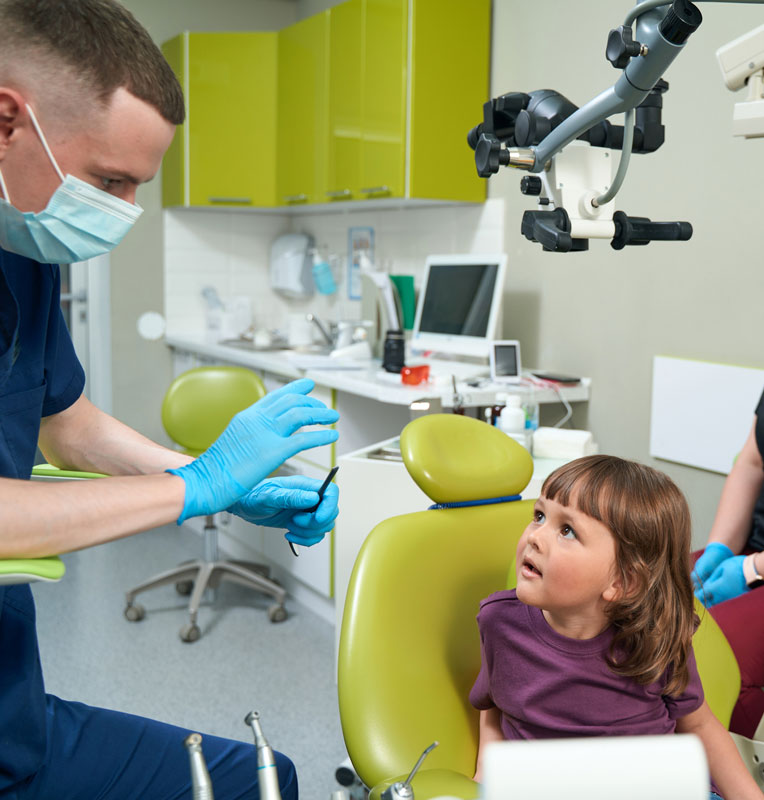
Baby teeth and bite problems often go hand in hand during the early years, when small misalignments of the teeth or jaws begin to affect how your child chews, speaks, and develops. These issues, called malocclusions, can range from mild crowding to more significant concerns like crossbites, underbites, or open bites. The good news? When caught early, many bite problems respond well to simple interventions that guide growth naturally. Knowing what to look for in those first few years can make all the difference for your family.
What Are Bite Problems in Little Smiles Under Age 7?
The American Association of Orthodontists recommends every child have their first orthodontic evaluation by age 7. Why so young? At this age, your child has a mix of baby teeth and emerging permanent teeth, giving a board-certified orthodontist a clear window into how their bite is developing. This timing allows for early detection of issues that become harder to correct later.
Baby teeth aren’t just placeholders. They serve as guides for permanent teeth, maintaining the space and alignment needed for adult teeth to erupt properly. When baby teeth are lost too early, shift out of position, or don’t fit together correctly, it can set off a chain reaction affecting your child’s permanent smile.
Common bite issues parents notice in kids under 7 include:
- Crossbite: Upper teeth sitting inside lower teeth instead of outside
- Underbite: Lower jaw extending past the upper jaw
- Open bite: Front teeth that don’t meet when back teeth are closed
- Deep bite: Upper front teeth covering too much of the lower teeth
- Crowding: Teeth overlapping or twisting due to lack of space
These problems don’t always appear out of nowhere. Early bite issues often stem from a combination of factors: genetics play a significant role, but oral habits like thumb sucking, extended pacifier use, or mouth breathing can reshape the developing palate over time. Tongue and lip ties, increasingly recognized as contributors to dental and orthodontic issues, can also restrict proper oral posture and influence jaw growth.
A board-certified pediatric dentist looks at all of these factors together rather than in isolation, because the mouth, the airway, and habits all interact. Understanding what’s happening in your child’s mouth before age 7 gives you the chance to address small concerns before they become bigger challenges. A quick evaluation can provide peace of mind or catch something worth addressing early.
How Baby Teeth Bite Problems Develop Before Age 7
Baby teeth bite problems develop when habits, genetics, or structural factors disrupt jaw growth and tooth eruption before age 7. Pressure from thumb sucking, mouth breathing, or premature tooth loss can shift teeth out of position, narrow the palate, or push the jaws into uneven alignment. Catching these patterns early gives the growing mouth time to recover and develop properly.
Your child’s dental development follows a clear timeline. Baby teeth typically begin appearing around 6 months of age, and by age 3, most kids have their full set of 20 primary teeth. These early years build the foundation for everything that follows.
The real action starts around age 6 or 7. This is when the first permanent molars emerge behind the baby teeth, and the front baby teeth begin falling out to make room for permanent incisors. Your child enters what’s called the “mixed dentition” phase, a combination of baby teeth and permanent teeth sharing space in a developing mouth.
During this phase, the jaw bones are still growing and highly adaptable. This plasticity is both an opportunity and a vulnerability. The right guidance encourages proper growth patterns. But persistent habits or structural issues can redirect that growth in problematic directions.
What Habits Shape the Developing Mouth?
Thumb sucking and pacifier use are normal in infancy. Most children outgrow these habits naturally. But when they continue past age 3 or 4, the constant pressure on the palate and teeth creates lasting changes. The upper jaw narrows, the front teeth protrude, and an open bite develops where the front teeth no longer meet.
Mouth breathing is another habit that affects development, and it’s one parents often overlook. When kids breathe primarily through their mouths (due to allergies, enlarged tonsils, or habit), their tongue rests low in the mouth rather than against the palate. This changes the balance of forces shaping the jaw. Over time, the upper jaw can become narrow and the face may develop a longer, more vertical growth pattern.
What Structural Factors Affect Bite Development?
Tongue and lip ties deserve attention too. These are bands of tissue that restrict the movement of the tongue or lips. According to the American Academy of Pediatric Dentistry, ties affect nursing in infants, but their impact extends beyond feeding. They influence speech development, breathing patterns, and even dental crowding as kids grow.
When baby teeth are lost prematurely, whether from decay, injury, or extraction, the neighboring teeth often drift into the empty space. This drift blocks permanent teeth from erupting in their correct positions, leading to crowding, impaction, or misalignment.
Airway issues are another piece of the puzzle. Children who snore, breathe loudly during sleep, or show signs of sleep-disordered breathing may be compensating with jaw positions that affect their bite development. The connection between breathing and bite is stronger than many parents realize.
Benefits of Catching Bite Problems Before Age 7
Early detection creates options. When bite problems are identified while your child is still growing, treatment works with natural development rather than against it. Here’s what early intervention accomplishes, especially when guided by a board-certified orthodontist who specializes in growing patients.
How Does Early Treatment Guide Healthy Growth?
Guides jaw growth during the optimal window. According to the American Association of Orthodontists, the jaw bones are still forming during the elementary school years and respond well to gentle guidance. Appliances like palatal expanders widen a narrow upper jaw gradually, creating space for permanent teeth and improving the bite relationship. This same correction becomes much harder, and sometimes requires surgery, in adults whose bones have finished growing.
Reduce the likelihood of extractions or surgery. By creating space and correcting jaw relationships early, many kids avoid the need for permanent tooth extractions that were once common in orthodontic treatment. Severe skeletal discrepancies caught early can be corrected with growth modification, often avoiding jaw surgery in the teenage years.
Addresses harmful habits before permanent damage occurs. Habit appliances help children stop thumb sucking or tongue thrusting while the effects are still reversible. Breaking these habits at age 6 produces different results than addressing them at age 12.
Why Does Early Care Matter for Confidence and Function?
Improves function now, not later. Kids with bite problems often struggle with chewing, speaking clearly, or breathing comfortably. Early treatment improves these daily functions during important developmental years, when children are learning to read, socialize, and build confidence.
Supports self-esteem during formative years. Protruding teeth, visible underbites, or significant crowding affect how children feel about their smiles. Addressing these concerns before the social pressures of middle school makes a meaningful difference in confidence.
May reduce overall treatment time and complexity. The American Association of Orthodontists notes that early treatment doesn’t always mean more treatment. In many cases, Phase 1 intervention simplifies or shortens the Phase 2 treatment needed later. Some little smiles who receive early intervention won’t need full braces at all.
| Early Intervention Benefit | Long-Term Impact |
|---|---|
| Guides jaw growth | Reduces need for surgery |
| Creates space for teeth | Fewer extractions needed |
| Breaks harmful habits | Prevents permanent changes |
| Improves breathing | Better sleep and focus |
| Boosts confidence | Positive social development |
Phase 1 Early Treatment vs. Waiting for All Permanent Teeth
Phase 1 treatment is early, targeted care between ages 6 and 9 that guides jaw growth and corrects specific issues while baby teeth are still present. Waiting just means monitoring development until more permanent teeth arrive. The right choice depends on what your child’s bite is actually doing, which is exactly what an age 7 evaluation with a board-certified orthodontist is designed to figure out.
Not every child needs early orthodontic treatment. That’s an important point. The age 7 evaluation exists to identify which kids will benefit from intervention and which can safely wait and be monitored.
When Does Phase 1 Treatment Make Sense?
Phase 1 treatment, also called interceptive orthodontics, typically occurs between ages 6 and 9 according to AAO guidance. It targets specific issues that are better addressed before all permanent teeth arrive. These include:
- Crossbites that could cause jaw asymmetry if left untreated
- Severe crowding that will block permanent teeth from erupting
- Underbites caused by jaw growth discrepancies
- Harmful habits that are actively reshaping the mouth
- Airway concerns related to narrow palates
Phase 1 treatment uses appliances designed for growing children. Palatal expanders gradually widen the upper jaw. Partial braces align front teeth or create space. Space maintainers hold room for permanent teeth after early baby tooth loss. Habit appliances discourage thumb sucking or tongue thrusting.
Treatment generally lasts 6 to 18 months, followed by a resting period where growth continues naturally. During this time, remaining baby teeth fall out and permanent teeth erupt.
When Is Waiting the Right Choice?
For kids with mild crowding or minor alignment issues, waiting often makes more sense. If the bite relationship is healthy and there’s adequate space for permanent teeth, monitoring lets you see how things develop naturally.
The age 7 evaluation isn’t about starting treatment for every child. It’s about knowing what you’re working with. Many families leave their first orthodontic visit with a plan to return in 6 to 12 months for monitoring, no treatment needed yet.
What Is Phase 2: The Full Treatment Stage?
Phase 2 treatment typically begins around age 11 or 12, once most or all permanent teeth have erupted. This is when full braces or Invisalign® align the full adult dentition. Kids who had Phase 1 treatment often have simpler Phase 2 needs because the groundwork was already laid.
| Treatment Phase | Typical Age | Goals | Common Appliances |
|---|---|---|---|
| Phase 1 | 6-9 years | Guide jaw growth, create space, correct habits | Expanders, partial braces, habit appliances |
| Monitoring | 9-11 years | Watch eruption, assess development | None (observation only) |
| Phase 2 | 11+ years | Align all permanent teeth, finalize bite | Full braces, Invisalign®, retainers |
What Influences the Cost of Early Orthodontic Care
Understanding the financial side of early orthodontic care helps families plan ahead. The cost picture isn’t a single number, it’s a combination of evaluation fees, appliance choice, treatment length, insurance details, and payment options. Looking at each piece individually makes the overall investment much easier to understand.
What Factors Drive the Price of Phase 1 Treatment?
Many orthodontic practices offer free consultations for kids, which removes the barrier to getting that important first look at your child’s development. From there, the appliance type your child needs has a big effect on cost. A simple space maintainer is generally less expensive than a palatal expander, which is generally less expensive than partial braces. Treatment length also factors in. Phase 1 treatment generally ranges from 6 to 18 months, and shorter courses tend to cost less than longer ones, although the complexity of the case matters more than time alone.
Diagnostic records can influence the total too. X-rays, digital scans, and progress photos are part of careful planning, and some practices include these in the evaluation while others bill them separately. Asking what’s bundled into the quoted fee helps you compare apples to apples.
How Do Insurance and Payment Options Affect Cost?
Insurance coverage varies widely. Many dental insurance plans cover a portion of orthodontic treatment for kids, especially when it’s deemed medically necessary. Crossbites causing jaw asymmetry or severe crowding preventing tooth eruption often qualify for coverage. Checking your specific plan’s orthodontic benefits, lifetime maximums, and age limits is a smart first step before you start treatment.
Payment plans give families a way to budget monthly rather than paying everything upfront, which makes Phase 1 care easier to fit into a family budget. Some practices also accept HSA and FSA dollars, which can stretch the budget further when these accounts apply.
Early intervention may also reduce lifetime costs. While Phase 1 treatment is an investment, it often reduces the complexity and cost of Phase 2 treatment later. Kids who avoid extractions, jaw surgery, or extended full treatment may spend less overall on orthodontic care.
The biggest payoff of an early visit is just knowing where things stand. Whether your child needs treatment now, later, or not at all, that clarity helps you make informed decisions for their dental health.
Signs Your Child Should Be Evaluated by Age 7
Signs your child needs an orthodontic evaluation by age 7 include early or late baby tooth loss, chewing difficulty, mouth breathing, persistent thumb sucking, jaw shifting, and protruding front teeth. You don’t need to be a dental professional to notice these red flags. A few minutes of attention to how your child eats, breathes, and smiles often reveals the patterns worth a closer look.
What Should Parents Notice About Tooth Development?
If your child loses baby teeth before age 5 or still has all their baby teeth past age 8, the timing of tooth development may be off. Early loss leads to space problems; late retention can block permanent teeth.
Sometimes permanent teeth come in crooked, overlapping, or in unusual positions. That often points to a space problem. Early assessment determines whether intervention now would help guide better eruption.
Front teeth that stick out significantly are also worth attention. Protruding teeth are more vulnerable to injury and often signal an underlying bite problem that’s easier to address while the jaw is still adaptable.
What Functional Signs Should Prompt an Evaluation?
Does your child avoid certain foods? Complain that chewing is hard? Bite their cheek or tongue often? These can signal bite alignment issues affecting daily function.
Speech difficulties are worth a closer look too. While many speech issues have other causes, some are tied to bite problems. Lisps, difficulty with certain sounds, or unclear speech sometimes improve when underlying dental issues are addressed.
What about breathing patterns? Children who breathe primarily through their mouths, snore regularly, or seem restless during sleep may have airway concerns connected to jaw development. A board-certified orthodontist working alongside a board-certified pediatric dentist can assess whether the bite is contributing to breathing difficulties.
If your child still sucks their thumb or uses a pacifier past age 4, the habit is likely affecting their bite. An evaluation can determine how much impact has occurred and what intervention might help.
Watch for jaw shifting, clicking, or asymmetry. If your child’s jaw shifts to one side when biting, makes clicking sounds, or appears uneven when you look at their face straight on, these are signs worth investigating.
Even if you don’t notice obvious signs, the age 7 evaluation serves as a baseline. Many bite problems aren’t visible to parents but are easily detected by trained eyes looking at X-rays and bite relationships.
Frequently Asked Questions About Early Bite Problems
At what age should my child first see an orthodontist?
The American Association of Orthodontists recommends an initial orthodontic evaluation by age 7. At this age, your child has enough permanent teeth erupting for an orthodontist to assess how the bite is developing. This doesn’t mean treatment starts at 7. It means problems can be identified early when they’re often easier to address.
Do crooked baby teeth mean permanent teeth will be crooked too?
Not necessarily. Baby teeth and permanent teeth are different sizes, and some crowding in baby teeth is normal. However, severe crowding, spacing issues, or bite problems in baby teeth can indicate that permanent teeth may face similar challenges. An early evaluation helps predict what’s likely to happen and whether intervention would help.
Can thumb sucking really cause bite problems?
Yes. Prolonged thumb sucking past age 4 puts consistent pressure on the developing palate and front teeth. This can narrow the upper jaw, push front teeth forward, and create an open bite. The good news: if the habit stops early enough, some of these changes self-correct as growth continues.
What is a crossbite and why does it need early treatment?
A crossbite occurs when upper teeth sit inside lower teeth instead of outside. It can happen in the front teeth (anterior crossbite) or back teeth (posterior crossbite). Early treatment matters because crossbites can cause the jaw to shift to one side during growth, which can lead to facial asymmetry over time.
Will my child still need braces if they have Phase 1 treatment?
Many kids who have Phase 1 treatment still go on to have Phase 2 full treatment with braces or Invisalign®. However, Phase 1 often makes Phase 2 shorter, simpler, or less invasive. Some children with limited early issues won’t need Phase 2 at all, and an age 7 evaluation gives you a better idea of what to expect for your child.
How do I know if my child has an airway or breathing issue?
Signs to watch for include mouth breathing during the day, snoring at night, restless sleep, teeth grinding, dark circles under the eyes, difficulty concentrating, and bedwetting past the expected age. If you notice these signs, mention them at your child’s dental or orthodontic visit. The relationship between airway health and jaw development is an area where pediatric dentists and orthodontists provide valuable insight.
Your child’s smile is developing right now. The choices made during these early years, whether to evaluate, monitor, or treat, can shape their dental health for decades. If your little one is approaching age 7 or showing any signs that caught your attention while reading this, a simple evaluation with a board-certified orthodontist can provide clarity about what’s actually happening and what, if anything, needs attention.
The goal of an early evaluation isn’t to start treatment for every child. It’s to give families honest, kindness first guidance about what their child actually needs, whether that’s treatment now, monitoring for later, or simply reassurance that everything looks great. Helping little smiles shine bright begins with information, and the age 7 evaluation is one of the most useful sources of information you can get about your child’s growing smile.