
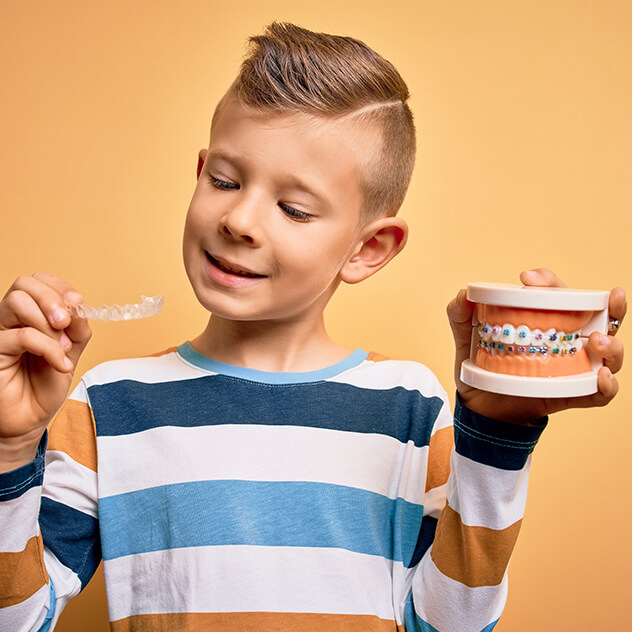
If your child is approaching age 7 and you are hearing about Phase 1 orthodontics, you are not alone. This is the age when a simple check can help guide jaw growth, create room for incoming adult teeth, and improve how your child bites, chews, and breathes.
At KIND SMILES in Irvine, our goal is to make early orthodontic care kind, simple, and effective, with options that fit your child’s personality and your family’s routine.
“They truly treat you like family, so patient with my 7-year-old!”
Why Age 7 Is A Smart Time To Check In
Around ages 6 to 7, the first adult molars and front teeth begin to appear. This gives an orthodontist a clear window into how the jaws are growing and whether there is crowding, crossbite, underbite, or bite-related wear that could benefit from early guidance.
A Phase 1 evaluation does not always mean treatment starts right away. Many children are placed on a gentle growth monitoring schedule. However, if spacing, bite, or airway habits need support, early treatment can make later orthodontic care simpler and often shorter.
Invisalign® First Vs Early Braces: What Is The Difference?
Both Invisalign® First and limited early braces are designed to achieve Phase 1 orthodontic goals. These may include:
- Creating space for incoming permanent teeth
- Guiding jaw growth to improve the bite
- Supporting healthier oral habits and airway function
Here is how they differ in everyday life.
Appliance type
- Invisalign® First uses a series of custom clear aligners designed specifically for growing children. Small tooth-coloured attachments may be added for precise movements.
- Early braces use small brackets and a wire placed on selected teeth, sometimes combined with springs or elastics.
Comfort and convenience
- Invisalign® First aligners are smooth and removable for meals, meaning no pokey wires and fewer emergency visits.
- Braces work full time, which can be helpful for children who may struggle to remember consistent aligner wear.
Hygiene
- Aligners are removed for brushing and flossing, allowing normal oral hygiene routines and reducing plaque buildup.
- Braces require extra tools such as floss threaders or water flossers to keep teeth and gums healthy.
Lifestyle and sports
- Aligners work well with sports mouthguards and are gentler on cheeks and lips during activities.
- Braces can still be worn with a mouthguard, but there may be more bulk and occasional irritation.
At KIND SMILES, Dr. Junyi Xie, our board-certified orthodontist and top 1% Invisalign® provider, helps families choose the option that best suits their child’s growth, habits, motivation, and schedule.
Meet The Invisalign® Palatal Expander
Expansion is used to widen the upper jaw when needed to correct crossbites, create space for crowded teeth, and support nasal airflow. The Invisalign® Palatal Expander System is an FDA-approved plastic expander that gently widens the upper jaw using a series of custom devices.
There are no metal bands on molars, no keys to turn, and hygiene is much simpler.
Who qualifies?
- Children typically aged 6 to 10, while the mid-palatal suture is still flexible
- Kids with narrow upper arches, crossbites, or significant crowding
- Children who may benefit from improved nasal breathing and tongue posture
Dr. Xie confirms candidacy using a digital exam and 3D imaging when needed. If your child is not a match for the plastic expander, KIND SMILES also offers comfortable, precisely fitted 3D metal printed expanders. These custom designs avoid painful spacers and bulky bands, helping kids adapt faster.
Do Removable Aligners Make Hygiene And Sports Easier?
Yes. Aligners are removed for brushing and flossing, making it easier to clean thoroughly twice a day. Without brackets to trap food, enamel and gums are better protected.
For sports, aligners are smooth and mouthguard-friendly. Many families also appreciate fewer in-office visits thanks to virtual monitoring. Parents send quick photos through the app, and Dr. Xie advises when to change trays or come in. Busy school and activity schedules stay on track.
When Early Braces Are The Better Choice
Early braces may be the preferred option when:
- A child is not ready to wear aligners 20 to 22 hours per day
- Specific tooth movements or eruptions require fixed control
- Springs or small appliances are needed for bite correction in the same phase
Sometimes the best plan combines approaches, such as an expander followed by a short phase of aligners or braces to fine-tune alignment. We explain all options clearly so you can decide with confidence.
How Long Does Phase 1 Take, And What Does It Cost?
Most Phase 1 treatments last between 9 and 12 months. Some finish sooner, while others may take closer to 15 months, depending on growth and goals. The aim is to achieve the right changes without overtreating.
After Phase 1, children typically wear a retainer and continue growing until it is time to reassess for Phase 2 in the teenage years.
Costs vary by treatment type and complexity. At KIND SMILES, pricing for Invisalign® First, expanders, and limited early braces is transparent and often comparable. Families benefit from:
- Complimentary insurance benefit checks
- 0% interest payment plans
- Simple financing tailored to your monthly comfort level
Exact fees are reviewed after a scan and exam, so you know the full picture before deciding.
Why Choose KIND SMILES For Early Orthodontics
- Gentle, kid-first care with a warm team that explains every step
- Dr. Junyi Xie, board-certified orthodontist and top 1% Invisalign® provider
- FDA-approved Invisalign® palatal expander and custom 3D metal printed expanders
- Digital scanning, instant smile simulations, and virtual monitoring
- Evening and Saturday appointments, free parking, and on-call support
- Therapy dog Mochi on select days for extra calm and smiles
Parents often tell us, “My child left excited, not scared. They really care.”
If you are looking for a trusted orthodontist in Irvine, KIND SMILES offers free orthodontic consultations for braces and Invisalign®. Every visit includes a free Invisalign® smile simulation, so you can preview your child’s potential smile in minutes.
Bottom Line For Parents
- Age 7 is an ideal time to check growth and plan ahead
- Invisalign® First offers comfort, easy hygiene, and fewer visits with virtual monitoring
- The Invisalign® palatal expander can widen arches without keys or metal bands for suitable children
- Early braces remain an excellent option when fixed guidance or extra control is needed
- Most Phase 1 treatments last about one year, with clear costs and flexible financing
Wondering what is right for your child? Schedule a complimentary consultation today to get clear answers, a kind plan, and a confident path forward.