
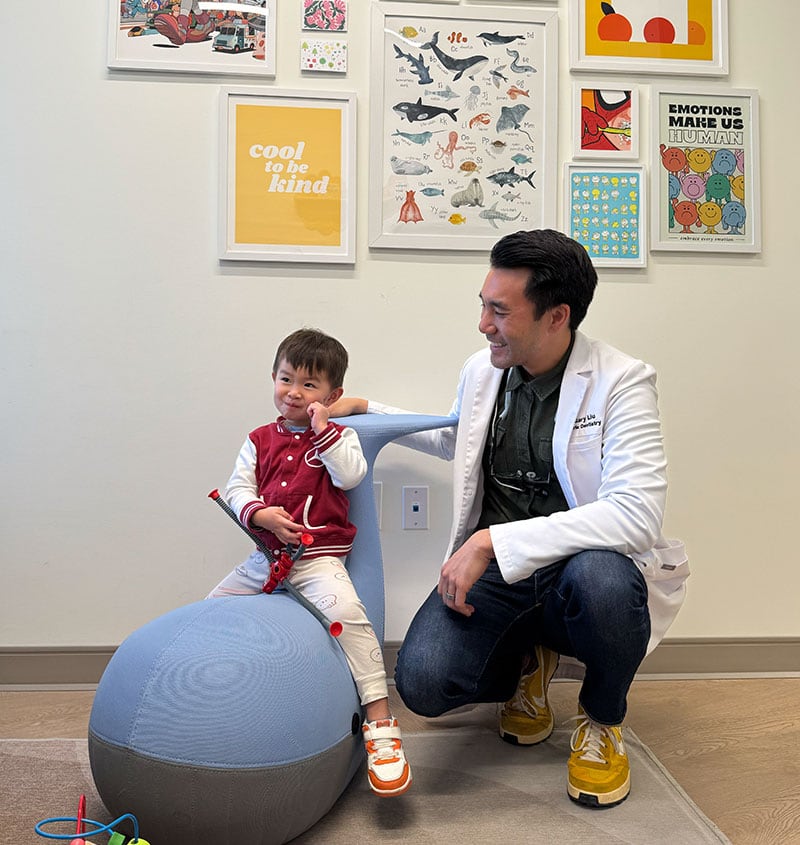
The crying starts in the parking lot, or the night before, or the moment you say the word appointment. If your child is scared of the dentist, you are not doing anything wrong and you are very much not alone. What follows is what actually helps, from a practice built around exactly this problem.
How Do You Help a Child Who Is Scared of the Dentist?
Start early, keep your language plain and positive, and let your child preview the office before treatment happens. Choose a pediatric team trained for nervous kids, bring a comfort item, and tell us about the fear so we can slow the visit down.
Everything below is the long version of that paragraph: where the fear comes from, what to do in the week before a visit, what we change in the chair, and the point at which nitrous oxide or sedation becomes a reasonable part of the plan instead of a last resort.
Why Is My Child Afraid?
Dental fear in children usually traces back to one of a few things, and knowing which one you are dealing with changes what you do about it:
- The unknown. Unfamiliar room, unfamiliar noises, a stranger looking in their mouth.
- Loss of control. Lying back while an adult works above them is genuinely disempowering for a small child.
- A previous bad visit. One rushed or painful appointment can set the tone for years.
- Borrowed anxiety. Children pick up a parent’s own dental dread with startling accuracy.
- Sensory load. The drill’s vibration, bright lights and strong tastes are a lot for sensitive kids, including many children who benefit from special needs dentistry.
None of these are character flaws, and none of them are permanent. They are all things a visit can be designed around.
Is This Normal Nerves or Real Dental Anxiety?
Most children are a little wary of a new place. Anxiety looks different: it starts before the visit, it does not settle once your child is in the room, and it shows up in the body as much as in the protest. The signs we hear about most from Irvine parents cluster into four groups.
- Behavior: clinging, hiding, refusing to leave the car, tantrums that are out of character.
- Body: stomach aches the morning of, headaches, trouble sleeping the night before, crying that starts hours early.
- Words: repeated questions about whether it will hurt, or bargaining to reschedule.
- Avoidance: brushing battles at home, because the toothbrush is now associated with the appointment.
If you are seeing several of those, say so when you book rather than hoping the day goes well. A visit planned for an anxious child is a different appointment from a visit that discovers one halfway through.
When the Fear Is About One Specific Thing
Ask your child what part they are worried about, because the answer is often narrower than the fear looks. Needles, gagging, the sound of the drill, the taste of fluoride and simply not knowing when it will stop are all common, and each has a workaround. Gagging responds to sitting more upright and slower placement. Sound and vibration are often removable entirely with our laser. Not knowing when it stops is answered by the hand-raise signal. Tell us the specific trigger and we will design around it instead of guessing.
What Should I Say to My Child Before a Dental Visit?
Fewer words, chosen carefully. Children hear reassurance as a signal that something is worth being reassured about, so a long comforting speech usually raises the temperature rather than lowering it. Say when the visit is, what will happen in the simplest possible terms, and then move on.
Words That Help, Words That Backfire
Skip needle, shot, drill, pull and hurt entirely, even in a sentence meant to be soothing. Our team uses child-friendly substitutes for every instrument, and a parent who has already introduced the scary version undoes that. Avoid it will not hurt, too, because it plants the possibility. Try:
- “We are going to visit Dr. Gary and count your teeth.”
- “He will take pictures of your teeth so we can see how they are growing.”
- “You can hold the little mirror and watch.”
- “If you want a break, you can raise your hand and we stop.”
That last one matters more than the rest combined. Giving a child a reliable stop signal restores the control they lost the moment the chair reclined, and children who know they can pause almost never need to.
What to Do in the Week Before
Book a morning slot if your child is small; tired children have no reserves left by mid-afternoon. Read a book about a dental visit or play dentist at home with a toothbrush and a stuffed animal, taking turns so your child gets to be the one in charge. Let them pack a comfort object. Take a look at our office together online, or ask us for a walk-through so the room is familiar before it matters. Keep your own commentary about your own dental history out of it.
What Do You Do Differently for an Anxious Child?
Our whole practice is arranged around this, from the room to the technology to the pace. We are, as our team puts it, in the business of kindness, and a first visit for a frightened child is often mostly conversation.
A Visit Built for Kids, Not Shrunk Down for Them
The environment is intentional: a welcoming, kid-focused office and a team experienced at giving positive dental experiences to children who arrive scared. Our pediatric dental exams are paced so your child meets the instruments before anything is used, gets narration for every step, and hears specific praise rather than a generic good job. When a child needs to stop, we stop. Nothing about a routine exam is urgent enough to be worth a lost decade of trust.
Technology That Removes the Scariest Parts
A lot of pediatric dental fear is fear of two specific things: the injection and the drill. Our dental laser can replace the drill in the majority of our procedures and lets us virtually eliminate anesthetic injections, so the sound, the vibration and the numb-lip hours that children hate are frequently off the table entirely. If those are your child’s sticking points, laser dentistry is the single most useful thing to ask about.
What a First Visit Looks Like When a Child Is Frightened
For a child who arrives in tears, the plan is deliberately unambitious. We introduce the team, show the chair, let your child touch the mirror and the little suction straw, and count teeth with whatever tolerance they have that day. If X-rays can wait, they wait. If a cleaning turns into a polish of the front four teeth only, that is a successful appointment.
The reason we can afford to move that slowly is that our whole pediatric dentistry program is built on frequency rather than heroics: an exam every six months, from the eruption of the first tooth, so nothing ever has to be crammed into a single high-stakes visit. Children who come twice a year for uneventful checkups accumulate proof that the office is boring, which is the best thing a dental office can be to a nervous 5-year-old.
Where Nitrous Oxide and Sedation Fit
Behavioral support handles most children. When it does not, nitrous oxide is the gentle next step: a nasal mask that keeps your child awake and relaxed, easy to adjust and quick to reverse. For extensive treatment, very young children or extreme anxiety, Dr. Gary may discuss sedation options, including IV sedation performed in our office. It is a considered choice, not a shortcut, and he only recommends it when your child would truly benefit.
Which Approach Should We Try First?
This is the ladder we work up, and most families never leave the first two rungs:
| Approach | What it looks like | When we reach for it |
|---|---|---|
| Behavioral | Tell-show-do, simple words, letting your child hold the mirror, praise | First line for almost every nervous child |
| Environment | A kid-built office, a familiar hygienist, short early appointments | Children who freeze in unfamiliar rooms |
| Technology | Our dental laser instead of a drill and, in most procedures, no injection | Fear of needles, the drill sound or vibration |
| Nitrous oxide | A nasal mask that keeps your child awake but relaxed | Nerves that behavioral steps alone do not settle |
| IV sedation | Your child sleeps through treatment, in our office | Extensive work, very young children, extreme anxiety or special needs |
What If My Child Refuses to Open Their Mouth?
Then that is the visit, and it still counts. A child who sits in the chair, meets Dr. Gary and leaves smiling has done real work, and the next appointment starts from a better place. Forcing a mouth open buys one look and costs years of cooperation.
What we do instead is shorten the goal. Sit in the chair. Ride it up and down. Hold the mirror. Let the hygienist count teeth with a finger. Come back in a few weeks and add one step. Progress in small pieces is how genuinely fearful children become teenagers who book their own cleanings.
Frequently Asked Questions
At what age should my child first see a dentist?
We recommend a gentle exam every six months starting from the eruption of the very first tooth. Early, uneventful visits are the strongest anxiety prevention there is, because the office becomes familiar before anything needs fixing.
Should I stay in the room with my child?
Usually yes for young children, and we will tell you if your presence is helping or unintentionally raising the tension. Calm, quiet company works best; a running commentary of reassurance does not.
Is it worth seeing a pediatric dentist instead of our family dentist?
For an anxious child, the difference is training and environment. Dr. Gary is a board-certified pediatric dentist, and everything from the room to the vocabulary to the appointment length is built for children rather than adapted for them.
My child had a bad experience before. Can that be undone?
Yes, though not in one visit. Tell us what happened, including which part frightened them, and we will design the next appointment to avoid that trigger and rebuild from there.
Bring Us the Nervous Ones
You do not need to fix your child’s fear before you call. Tell us about it when you book, and we will plan the visit around it. Book a pediatric appointment at KIND SMILES, 114 Pacifica, Suite 350a in Irvine, or call or text (949) 561-1088. Kindness first, then teeth.