
No. As long as your teeth and gums are healthy, it is never too late for orthodontic treatment. Adults straighten teeth with clear aligners, tooth-colored ceramic braces or metal braces, and the right choice depends on your bite, goals and routine.
Many adults assume braces are something you either got as a teenager or missed for good. In reality, more people are starting treatment in their twenties, thirties and beyond, sometimes for the first time and sometimes because teeth have shifted since braces years ago. This guide covers what is different about adult treatment, how the options compare and how to decide whether now is the right time.
Is There an Age Limit for Orthodontic Treatment?
There is no upper age limit. Teeth move in response to gentle, steady pressure at any age, which is why orthodontic treatment works for adults just as it does for kids.
What actually matters is a healthy foundation. Active gum disease, untreated cavities or other dental problems need to be addressed first, because moving teeth through unhealthy gums and bone is not safe. If your general dentist is treating something, bring that up at your consultation so the timing can be planned.
The other difference is the jaw. Children’s jaws are still growing, so early treatment can guide that growth. Adult jaws have stopped growing. Teeth can still be moved, but a significant difference in the size or position of the jaws themselves may need surgery as part of the plan. That applies to a minority of adults, and it is something your orthodontist will assess at the first visit.
Why Do Adults Choose Orthodontic Treatment?
Appearance is often the first reason people mention, but it is rarely the only one.
A common one is teeth that shifted after childhood braces. Teeth can drift over time, especially if retainers were not worn as prescribed, and some adults who had braces as teens notice their lower front teeth crowding again. For minor shifting, a short course of aligners can be enough, which is exactly what our Invisalign Touch Up is designed for. Our guide to choosing a retainer after braces explains how to keep results in place afterward.
Health and function are another. Straight teeth are easier to clean, and a well-aligned bite spreads chewing forces more evenly. A straight smile is more than just good-looking; it supports your long-term oral health.
And for many people, it comes down to confidence. Adults often tell us they have hidden their smile in photos for years. Modern options make it possible to change that without putting a career or social life on hold.
What Problems Can Adult Orthodontics Fix?
Adult treatment covers the same range of problems as treatment for teens. What changes is the plan, not the list of things that can be corrected.
Crowding and spacing are among the most common reasons adults come in. Overlapping teeth are harder to brush and floss, which makes them more prone to plaque buildup. Gaps can let food collect and can widen over time. Both are often good candidates for clear aligners.
Bite problems are next. An overbite, underbite, crossbite or open bite affects how your top and bottom teeth meet, which can cause uneven wear on teeth and make chewing less efficient. Many bite issues can be corrected with braces or aligners alone. Severe overbites, underbites and open bites caused by jaw position may call for surgery alongside orthodontics.
Sometimes orthodontics is a step toward other dental work. Your dentist may recommend moving teeth first, for example to make room for a replacement tooth or to line teeth up so restorations fit well. If that is your situation, bring your dentist’s notes to the consultation.
Braces or Invisalign: Which Is Better for Adults?
For adult patients we offer removable clear aligners and discreet clear braces, as well as classic metal braces for those who prefer them. Here is how they compare.
| Invisalign clear aligners | Clear (ceramic) braces | Metal braces | |
|---|---|---|---|
| How it looks | Virtually invisible trays | Tooth-colored brackets that blend in | Visible metal brackets |
| Removable | Yes, for meals, brushing and special occasions | No | No |
| Daily commitment | Worn about 22 hours a day | Follow food guidelines | Follow food guidelines |
| Good fit for | Busy professionals who want discretion and flexibility | Adults who want fixed braces that are less noticeable | Budget-conscious adults and complex movements |
| Visits | New aligners every couple of weeks as advised | Regular adjustment appointments | Regular adjustment appointments |
Invisalign uses a series of custom clear aligners. You can take them out to eat, so there is no need to change your diet, but they only work when worn for the recommended 22 hours a day. We offer Invisalign Comprehensive for moderate to complex alignment, which typically takes 12 to 24 months. Invisalign Lite handles issues limited to the front six teeth, often in six months or less, and Invisalign Express covers minor alignment of the front six teeth and can finish in about three months. There is more detail on Invisalign for adults if aligners sound like the right fit.
Fixed braces use brackets and an archwire that Dr. Junyi adjusts at regular visits to apply gentle pressure where it is needed, and they can treat even the most complex orthodontic issues. Clear braces use tooth-colored ceramic brackets, while metal braces are tried-and-true and very budget-friendly. You can read how braces work, and our comparison of ceramic and metal braces goes deeper on the trade-offs.
Day to day, the two feel different. With aligners, you take the trays out to eat and drink anything other than water, then brush before putting them back in, so it helps to plan meals and carry a travel toothbrush. With braces, the first few days after placement and after each adjustment usually feel sore rather than painful, and soft foods help. Most people adjust to speaking normally within a short time with either option.
What Does the Adult Treatment Process Look Like?
Step 1: A free consultation
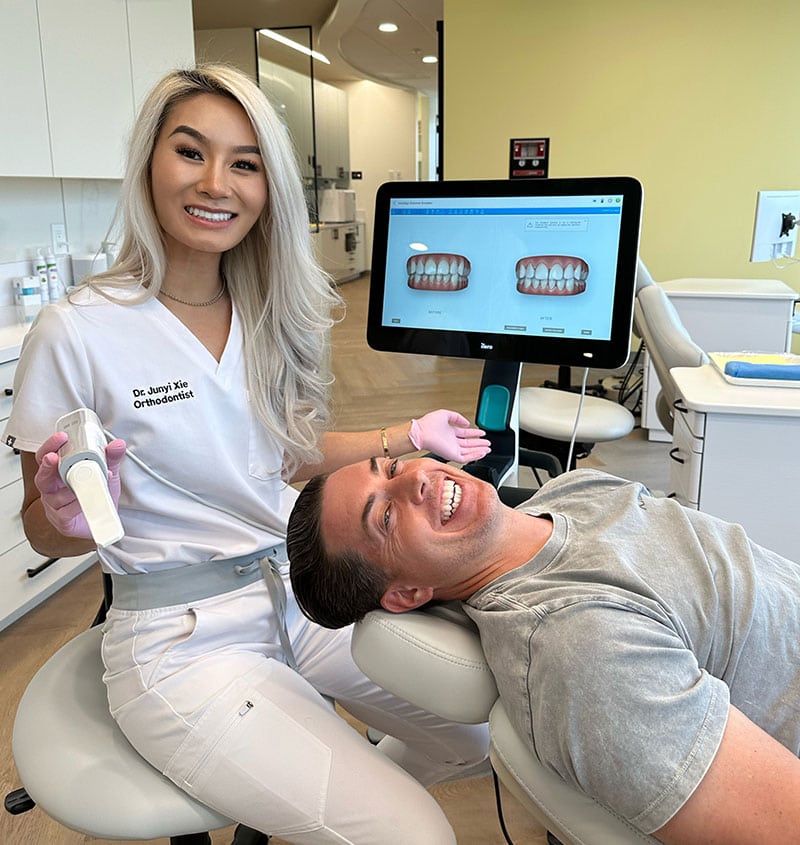
Your first visit is a smile exam, which may include photos, X-rays and scans. You meet with our orthodontist, Dr. Junyi Xie, a board-certified orthodontist, to talk about your goals and review your options. For Invisalign, we can even show you a simulation of your future smile at the assessment.
Step 2: A custom plan
Using a digital 3D scan of your teeth and jaws, Dr. Junyi maps out your treatment from the first aligner or bracket to the final result, so you know what to expect before you begin.
Step 3: Treatment and check-ins
With aligners, you switch to a new set every couple of weeks as advised. With braces, you come in for regular adjustment appointments. Either way, the plan is reviewed as your teeth move.
Step 4: Retainers
When active treatment ends, retainers keep your teeth in their new positions. This step matters even more for adults who have already seen teeth drift once. Ask which type of retainer suits you, how many hours a day to wear it at first, when you can move to nighttime-only wear and how to clean it. Treat a cracked or ill-fitting retainer as a reason to call, not something to wait out, because teeth can begin shifting within weeks without it.
A smaller group of adults also needs jaw surgery. When jaw position affects confidence, chewing, speaking or sleeping, orthognathic surgery performed by a maxillofacial surgeon may be combined with orthodontic treatment. In many cases Dr. Junyi can coordinate surgical cases with Invisalign instead of braces. Our overview of surgical orthodontics explains how those cases are planned.
How Do Adults Fit Treatment Into a Budget?
Every treatment plan is customized, so there is no one-size-fits-all price. We go over your exact costs once your plan is designed. We accept most major insurance plans and offer interest-free payment plans that spread the cost over up to 36 months, and we can run a complimentary insurance coverage check for you. More on orthodontic costs and payment options is available before your visit.
Frequently Asked Questions
Am I too old for braces at 40, 50 or 60?
Age on its own is not the deciding factor. Healthy teeth and gums are. Plenty of adults start treatment later in life, and your consultation will confirm whether your teeth and gums are ready.
Does adult orthodontic treatment take longer?
It depends on what needs to move. Minor alignment with Invisalign Express can take about three months, while comprehensive aligner treatment typically runs 12 to 24 months. Dr. Junyi will give you a realistic estimate for your case.
Will people notice I am in treatment?
With clear aligners, most people will not. Clear ceramic braces blend in with your teeth. Metal braces are more visible but are smaller and lower-profile than they used to be.
Can I start with a virtual consultation?
Yes. If you cannot make it to our Irvine office, send us photos of your smile and we will arrange a free virtual consultation to review your options.
Start With a Free Consultation — No Pressure
If you have been wondering whether it is too late, the quickest way to know is an exam. Learn more about our adult orthodontics options, book a free consultation online or call our Irvine office at (949) 561-1088.