
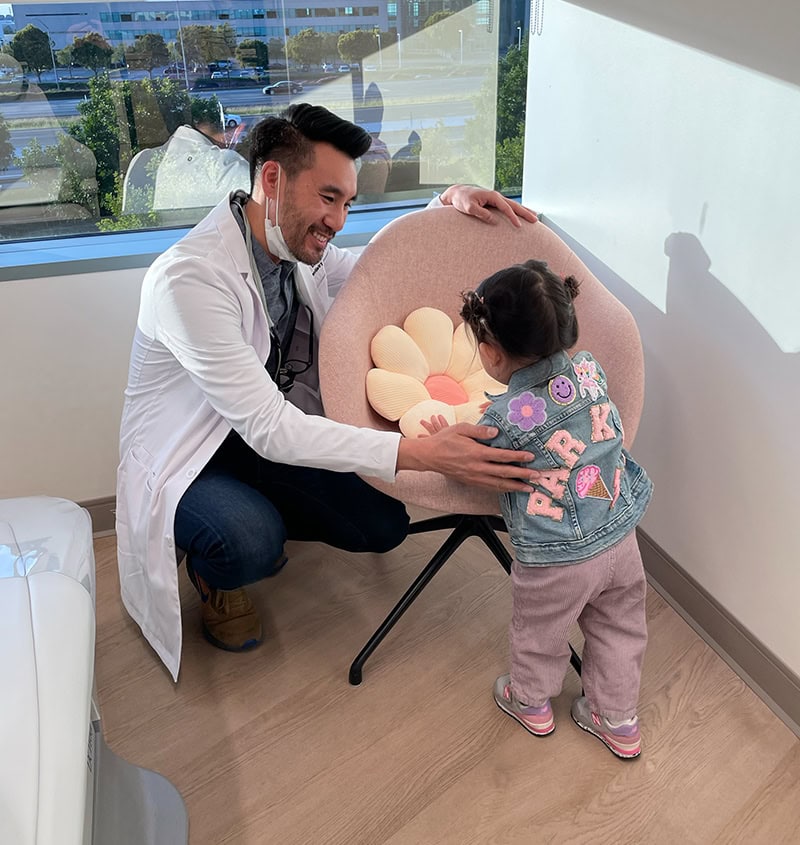
Few things make a parent pause like the word sedation on a treatment plan. You want your child comfortable, and you also want to know exactly what is going into their body and who is watching them while it does. Here is the honest version, the way Dr. Gary explains it in our Irvine office.
Is Dental Sedation Safe for Children?
Yes. Pediatric dental sedation is safe when a specialist screens your child’s health, chooses the mildest option that will work, and monitors them throughout. Risk rises with depth of sedation, which is why nitrous oxide comes first and deeper sedation is reserved for real need.
That single sentence hides a lot of judgment calls, though, and those judgment calls are the whole answer. Sedation is not a product you order; it is a decision made about one specific child, on one specific day, for one specific amount of treatment. Dr. Gary Liu, our board-certified pediatric dentist, has extensive experience with pediatric dental sedation and, as our sedation page puts it, will only recommend it if he thinks your child could truly benefit from it. A calm 9-year-old who needs one small filling does not need to be asleep.
Why Sedation Is Sometimes the Safer Choice
Parents often frame this as sedation versus no sedation. The real comparison is sedation versus what happens without it. A frightened child who cannot hold still during treatment is harder to treat precisely, more likely to need the visit repeated, and much more likely to carry the memory into every appointment afterward. Without sedation, some children end up needing multiple visits, or needing to be held still during treatment for their own safety, which is the outcome we are usually trying to avoid.
Untreated decay does not wait either. Tooth decay is one of the most common chronic childhood illnesses, and a cavity left alone spreads to the teeth beside it. Sometimes the gentlest path through a mouthful of work is one comfortable, sedated visit instead of five stressful ones.
When Does a Pediatric Dentist Recommend Sedation?
Our sedation page lists the reasons Dr. Gary may suggest it, and they are worth reading as a checklist rather than a warning:
- Your child is very young
- Your child has a lot of fear or anxiety at the dental office
- Your child has a short attention span and cannot sit through a procedure
- We need to complete extensive dental work
- Your child needs special needs dentistry because of a specific health condition
Notice what is not on that list: the size of a single filling, or a parent’s preference for speed. Length and complexity of treatment matter more than the name of the procedure. A child who needs several restorations across both sides of the mouth is in the chair far longer than a child getting one crown, and that time is usually what tips the decision.
What Sedation Does Not Fix
Sedation manages one appointment. It does not teach a child that dentistry is survivable, and it does not replace the slow work of building trust. That is why we treat it as one tool among several rather than the default answer for a nervous child, and why the first conversation is usually about behavior and environment, not medication.
What Types of Sedation Does KIND SMILES Offer?
We offer more than one kind of sedation at our Irvine office, and Dr. Gary helps you decide which fits your child. The two we use are nitrous oxide and IV sedation.
Nitrous Oxide (Laughing Gas)
Nitrous oxide is a mild sedative delivered through a small nasal mask. It will not put your child to sleep; it makes them feel care-free and relaxed enough that we can work comfortably and safely. We reach for it first wherever possible because it is safe, easy to adjust during the visit, quick to reverse, and non-allergenic. Your child stays awake, answers questions, and walks out under their own steam.
It is not universal. For a child with severe anxiety, real discomfort with a nasal mask, or nasal congestion on the day, laughing gas may simply not do enough, and we will talk about another option rather than push through a visit that is not working.
IV Sedation
IV sedation is the strongest method we use for pediatric patients, and we use it when the others are not an option: very young patients, extreme anxiety, or particular special needs. It is performed in our Irvine office, and your child is asleep for the duration of the procedure. There are more risks involved than with nitrous oxide, which is why Dr. Gary, who has specialized training in this method, walks parents through the pros and cons before anyone commits.
How Do the Two Compare?
Side by side, the differences are easier to hold onto:
| Nitrous oxide (laughing gas) | IV sedation | |
|---|---|---|
| How your child feels | Awake, relaxed, care-free | Asleep for the whole procedure |
| How it is given | A small nasal mask | An IV line, placed in our Irvine office |
| Best for | Mild to moderate nerves, routine fillings and cleanings | Very young children, extreme anxiety, special needs, extensive work |
| Wears off | Quickly, and it is easy to adjust or reverse mid-visit | Gradually, with recovery time in the office afterward |
| Things to weigh | Not effective for severe anxiety, a nasal mask your child dislikes, or nasal congestion | More risk than nitrous, so Dr. Gary reviews the pros and cons with you first |
How Does Dr. Gary Decide Which One to Use?
Four things drive the choice: your child’s age, their full medical history, how much treatment needs to happen and how long it will take, and whether they can tolerate a nasal mask for that long. A five-year-old needing one filling and a five-year-old needing four crowns are different problems, even though the child is the same. Health history can also rule an option out before anxiety is even discussed, which is why the intake paperwork is not a formality.
We also weigh what happened last time. If a child managed a filling with laughing gas six months ago, we start there again. If they could not, we do not pretend this visit will be different by force of will.
Sedation or Several Shorter Visits?
This is the trade-off parents most often want to talk through, and it is a real choice rather than a formality. Splitting treatment into short appointments avoids sedation entirely and works well for children whose nerves are manageable and whose decay is limited to one or two teeth. It costs more trips, more school pickups, and more chances for anxiety to build between visits.
One sedated visit consolidates everything: the work is completed while your child is comfortable, and there is no long tail of dread. It requires more preparation, a recovery afternoon, and, for IV sedation, a clear-eyed look at the added risk. Neither answer is automatically the kinder one, which is exactly why we walk through both rather than presenting a plan and asking you to sign it.
Children With Special Health Needs
For children with behavioral or medical conditions that make a conventional appointment unworkable, sedation is frequently what makes dental care possible at all rather than a comfort upgrade. Our team plans these visits around the child, and Dr. Gary coordinates the depth of sedation with the amount of treatment so that one appointment can cover what would otherwise take many. If this is your situation, tell us the specifics when you book, including what has failed elsewhere.
How Do I Prepare My Child for a Sedation Visit?
Most of the preparation is logistics plus tone. The logistics come from us: our team gives you specific instructions for your child’s appointment, including any eating and drinking rules, what to wear, and who needs to come along. Follow those to the letter, because an empty stomach requirement is a safety measure, not a formality, and a visit gets postponed when it is missed.
The tone is yours. Children read parents before they read the room. Keep the description short and neutral, avoid rehearsing your own dental history, and skip promises you cannot keep, such as telling a child they will not feel anything at all. If you want a script that works, ours is simple: Dr. Gary is going to help your tooth feel better, and you will feel sleepy and relaxed while he does.
What Happens Afterward?
After nitrous oxide, the effects fade within minutes of the mask coming off and most children go about their day. After IV sedation, expect a groggy, wobbly, occasionally weepy few hours. Plan a quiet afternoon at home, keep a parent nearby, offer soft foods and fluids, and skip playgrounds, bikes and swimming for the rest of the day. Call us at (949) 561-1088 if anything looks different from what we described before you left.
Does Insurance Cover Sedation for Kids?
Coverage varies by plan and by which sedation is used, so the only honest answer comes from your specific benefits. We accept all major PPOs and will run a complimentary coverage check if you send us your insurance card details. One detail worth knowing if you are weighing our in-office plan: our Kindness Club membership includes exams, cleanings, fluoride, necessary X-rays and an emergency exam, and members get 20% off additional pediatric treatments, but that discount excludes general anesthesia and orthodontics.
We would rather tell you that up front than have you discover it at checkout. If cost is shaping your decision, say so at the consultation, because the treatment sequence itself can sometimes be staged differently.
Frequently Asked Questions
Will my child remember the procedure?
With nitrous oxide, usually yes, though the memory tends to be hazy and unbothered. With IV sedation your child is asleep for the procedure and typically remembers arriving and waking up, but not the treatment itself.
Is laughing gas safe for a 3-year-old?
Nitrous oxide is used routinely in pediatric dentistry, including with preschoolers, because the dose is adjusted continuously and reverses quickly. Whether it is right for your 3-year-old depends on their health history and whether they will tolerate the nasal mask, which is exactly what Dr. Gary assesses at the visit.
Can we avoid sedation altogether?
Often, yes. Many children get through fillings with behavioral support and our dental laser, which lets us replace the drill in the majority of procedures and virtually eliminate anesthetic injections. Ask about laser dentistry at your appointment and tell us your child is nervous before we start, not after.
How long does sedation take to wear off?
Nitrous oxide wears off within minutes. IV sedation takes several hours to clear fully, with the first hour or two spent recovering in our office and the rest of the day best kept quiet at home.
Talk It Through With Dr. Gary Before You Decide
You do not have to choose sedation from a website. Bring your questions, your child’s health history and your worries to a visit, and we will tell you plainly whether sedation is warranted and which kind we would recommend. Book a pediatric appointment at our Irvine office at 114 Pacifica, Suite 350a, or call or text (949) 561-1088. Whatever we recommend, the goal is the same one we start every visit with: a child who leaves less afraid than they arrived.